
The filler market in Kuwait is small in absolute terms but one of the most active per capita in the Gulf. Clinics in Kuwait City, Salmiya, Hawalli and Jabriya now offer lip, cheek, jawline, under-eye and nose filler as routine, same-day treatments, and demand keeps rising each year. This guide covers how big the market is, what is driving it, which treatments lead, how regulation works, and what clinics should look for when choosing a dermal filler supplier in Kuwait.
Key takeaways
- The Kuwait hyaluronic acid (HA) filler market is estimated at about USD 13 million in 2025, projected to reach roughly USD 22 million by 2032 (about 7.8% CAGR, per Ken Research).
- The wider Middle East HA filler market was valued at about USD 318.6 million in 2024 and is forecast to grow at around 6.6% a year to 2033 (Grand View Research).
- Growth is driven by high disposable income, social media, a young adult population and a shift from surgery to non-surgical treatments.
- Kuwait is an import-led market: distributors import nearly all fillers and must register them with the Ministry of Health (MOH) before clinics can use them.
- Clinics increasingly want reliable local stock, fast delivery and consistent product quality from a registered distributor.
How big is the filler market in Kuwait?
Industry estimates put the Kuwait hyaluronic acid-based dermal filler market at around USD 13 million in 2025. Between 2020 and 2025, it grew at an estimated 10.2% a year, and forecasts expect it to keep growing at roughly 7.8% a year through 2032, when it could reach about USD 22 million.
For a country of around 5 million people, that is a meaningful market. Kuwait sits within a regional Middle East HA filler market worth over USD 300 million, alongside larger markets such as Saudi Arabia and the UAE. However, many Kuwaiti patients also travel to Dubai or abroad for treatment, so there is room for local clinics to capture more of that spend at home.
| Metric | Estimate |
|---|---|
| Kuwait HA filler market (2025) | ~USD 13 million |
| Kuwait projection (2032) | ~USD 22 million |
| Kuwait CAGR (2025–2032) | ~7.8% |
| Middle East HA filler market (2024) | ~USD 318.6 million |
| Middle East CAGR (2025–2033) | ~6.6% |
What is driving demand for fillers in Kuwait?
1. High disposable income
Kuwait has one of the highest household incomes in the region. As a result, many people see aesthetic treatments as regular self-care rather than a one-off luxury, and many patients return for top-ups every 6 to 12 months.
2. A young, image-conscious population
A large share of patients are women and men in their 20s, 30s and early 40s. Younger patients ask for lip and jawline definition; patients in their 30s and 40s increasingly choose preventive treatments to keep a natural, refreshed look.
3. Social media and Gulf beauty trends
Instagram, Snapchat and TikTok shape what patients ask for. In addition, before-and-after content from clinics and influencers makes treatments feel familiar. As a result, patients often arrive with a clear idea of the result they want.
4. Preference for non-surgical results
Fillers offer visible change with little downtime and a reversible, temporary effect. For example, non-surgical nose reshaping with filler has become popular with patients who are not ready for rhinoplasty.
5. Better products and techniques
Modern HA fillers come in different densities for different areas — soft gels for lips and fine lines, firmer gels for cheeks, chin and jawline. Therefore, injectors can match the product to the area, which improves results and patient satisfaction.
Most popular filler treatments in Kuwait
- Lip filler — the most requested treatment, for volume, shape and hydration.
- Cheek and midface filler — to restore volume and lift.
- Chin and jawline contouring — popular with both women and men.
- Under-eye (tear trough) filler — to soften hollows and tired-looking eyes.
- Non-surgical nose filler — to smooth bumps and refine the profile.
- Wrinkle and fold correction — nasolabial folds, marionette lines and fine lines.
Single-phase (monophasic) HA fillers hold the largest share of the market, at around 58%, and are also the fastest-growing type. Alongside fillers, demand is rising for skin boosters and collagen stimulators such as PLLA, which improve skin quality rather than adding volume.
Who uses fillers in Kuwait? Main end users
- Private aesthetic and cosmetic clinics
- Dermatology clinics
- Hospital aesthetic and plastic surgery departments
- Dental and orofacial aesthetic clinics
Private aesthetic clinics account for the largest share of filler use. Meanwhile, hospitals and dermatology centres are steady buyers of higher-end, well-documented products.
Regulation: how fillers are controlled in Kuwait
Kuwait regulates dermal fillers as medical devices. Before clinics can buy or use a filler, a locally licensed distributor must register it with the Kuwait Ministry of Health (MOH). The MOH classifies medical devices by risk level, and the registration requirements scale with that risk. Recent ministerial decisions have tightened rules for device registration and circulation, raising compliance expectations for distributors.
The MOH also enforces rules on clinic advertising and on who can inject. Only licensed doctors in licensed facilities should perform treatments. For this reason, clinics find it essential to buy only from a registered distributor with traceable, authentic stock — grey-market or unregistered products put patients, licences and reputations at risk.
Challenges in the Kuwait filler market
- Counterfeit and unregistered products sold online or through informal channels.
- Price pressure as more clinics compete for the same patients.
- Supply gaps when popular products run out and clinics wait on imports.
- Patient expectations shaped by filtered social media images.
- Regulatory compliance for advertising, registration and record-keeping.
Market outlook: where the filler market in Kuwait is heading
Overall, the outlook to 2030 and beyond is steady growth. In particular, expect more demand for natural-looking, “undetectable” results; more combination treatments that pair fillers with skin boosters and collagen stimulators; growing interest from male patients; and more value-focused European and Korean HA brands that offer strong quality at a competitive price. Ultimately, clinics that build trust through safe products, transparent pricing and skilled injectors will gain the most.
How clinics should choose a dermal filler supplier in Kuwait
- MOH registration — confirm the product is registered for use in Kuwait.
- Authentic, traceable stock — batch numbers, expiry dates and cold-chain handling.
- A clear product range — different densities for lips, mid-face, chin and jawline.
- Reliable local supply — stock held in Kuwait and fast delivery to your clinic.
- Flexible ordering — single boxes or bulk orders at fair pricing.
- Clinical support — product training and help with treatment protocols.
Rida Pharma: dermal filler distributor for clinics in Kuwait
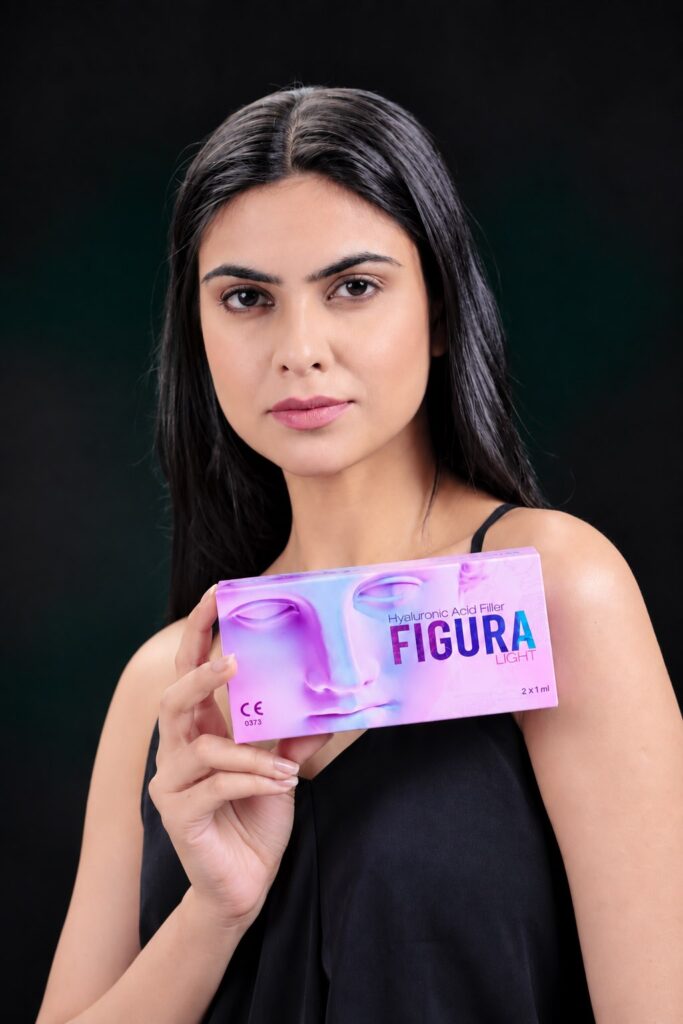
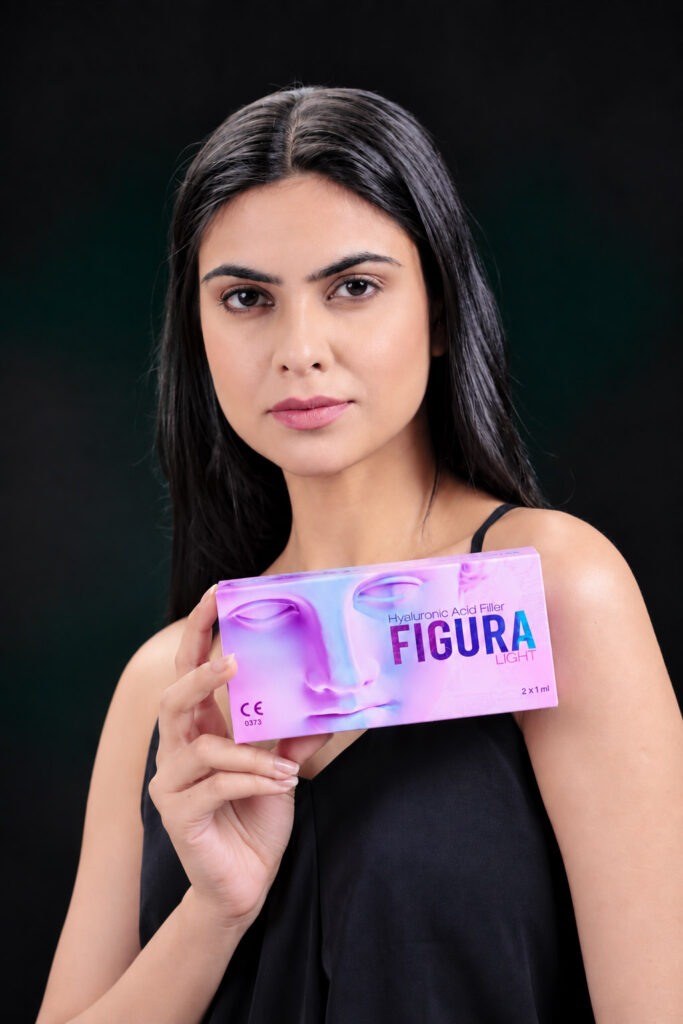
Rida Pharma is a Kuwait-based aesthetic distributor supplying clinics, dermatology centres and hospitals across the country. We are the distributor of FIGURA hyaluronic acid filler, available as Figura Light for lips and fine lines, Figura Soft for mid-depth correction, and Figura Strong for volume and contouring. Our range also includes KLIFT skin booster and AESPLLA PLLA collagen stimulator.
Clinics can order individual boxes or in bulk, with local stock and quick delivery across Kuwait. Contact Rida Pharma to request pricing or product information.
Frequently asked questions
How big is the filler market in Kuwait?
The Kuwait hyaluronic acid filler market is estimated at around USD 13 million in 2025 and is projected to reach about USD 22 million by 2032, growing at roughly 7.8% a year.
Are dermal fillers legal in Kuwait?
Yes. Dermal fillers are legal when the product is registered with the Kuwait Ministry of Health and the treatment is performed by a licensed doctor in a licensed clinic.
What is the most popular filler treatment in Kuwait?
Lip filler is the most requested treatment. After that come cheek, chin and jawline contouring, under-eye filler and non-surgical nose reshaping.
How long does hyaluronic acid filler last?
Most HA fillers last between 6 and 18 months depending on the product, the treatment area and the patient’s metabolism. Lips usually need top-ups sooner than cheeks or chin.
Where can clinics buy dermal fillers in Kuwait?
Clinics should buy only from a licensed, MOH-registered distributor. Rida Pharma supplies FIGURA HA filler, KLIFT skin booster and AESPLLA collagen stimulator to clinics across Kuwait, with single and bulk orders available.
Sources: Ken Research – Kuwait HA Dermal Fillers Market; Grand View Research – Middle East HA Dermal Fillers Market. Market figures are third-party estimates. This article is for general information and is not medical advice.