
Botox is the most requested non-surgical aesthetic treatment in Kuwait, and for good reason: a 15-minute appointment can soften forehead lines, frown lines and crow’s feet with no downtime. But with so many clinics in Kuwait City, Salmiya, Hawally and Jabriya offering it, patients often have the same questions. How does it work? How long does it last? Is it safe? And how do you choose the right clinic?
This guide to Botox in Kuwait answers all of that in plain language, so you can walk into your consultation informed and confident.
Table of contents
- What Is Botox?
- How Does Botox Work?
- Popular Botox Treatment Areas in Kuwait
- What to Expect: The Botox Procedure Step by Step
- When Will I See Results, and How Long Does Botox Last?
- Botox Aftercare Tips
- Is Botox Safe? Side Effects to Know Before Treatment in Kuwait
- How Much Does Botox Cost in Kuwait?
- How to Choose the Right Botox Clinic in Kuwait
- Botox vs. Dermal Fillers: What’s the Difference?
- Frequently Asked Questions About Botox in Kuwait
- The Bottom Line
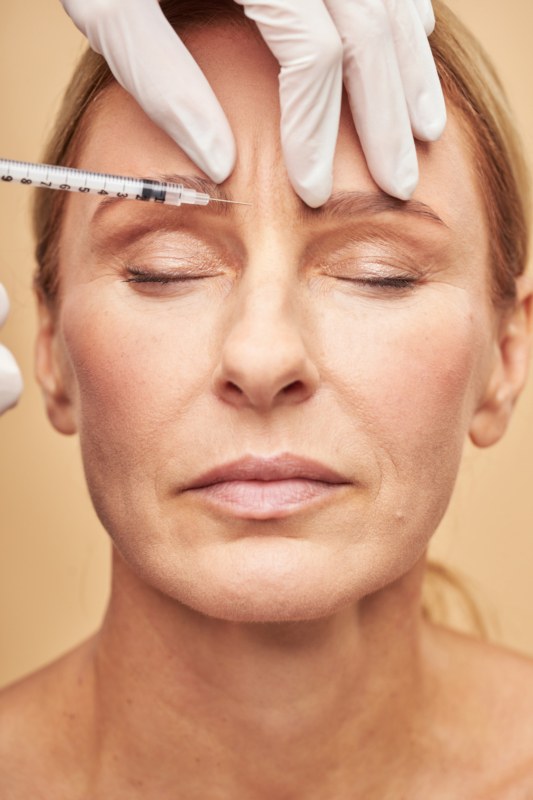
What Is Botox?
“Botox” is the popular name for botulinum toxin type A, a purified protein that temporarily relaxes the muscles it is injected into. Botox® itself is one brand; other well-known botulinum toxin brands include Dysport® and Xeomin®. Doctors often call the treatment “anti-wrinkle injections” or “neuromodulators”.
Botulinum toxin has been used in medicine for decades, first for eye-muscle conditions and later for cosmetic lines. In the right hands and at cosmetic doses, it has a long and well-documented safety record (see the NHS guide to Botox injections).
How Does Botox Work?
Many facial lines are dynamic wrinkles: they form because the same muscles contract thousands of times a day when you frown, squint or raise your eyebrows. Botox blocks the nerve signal that tells those specific muscles to contract. The muscle relaxes, the skin above it smooths out, and new creases stop forming.
As a result, a skilled injector can use small, precise doses so you still look like yourself and can still express emotion. The goal is a rested, refreshed look, not a “frozen” face.
Popular Botox Treatment Areas in Kuwait
- Forehead lines – horizontal lines that appear when you raise your eyebrows.
- Frown lines (the “11s”) – vertical lines between the eyebrows.
- Crow’s feet – fine lines at the outer corners of the eyes, often worsened by squinting in Kuwait’s strong sun.
- Bunny lines – small creases on the sides of the nose.
- Brow lift – a subtle lift of the tail of the eyebrow.
- Gummy smile – reducing how much gum shows when you smile.
- Jaw slimming (masseter Botox) – softening a square jawline and helping with teeth clenching.
- Neck bands – vertical bands on the neck.
- Excessive sweating (hyperhidrosis) – underarms, palms or feet, a popular choice during Kuwait’s long, hot summers.
What to Expect: The Botox Procedure Step by Step
1. Consultation
Your doctor reviews your medical history, examines how your facial muscles move and agrees a plan with you. This is the time to share your goals and ask questions.
2. Treatment (10–20 minutes)
The skin is cleaned and a few tiny injections are placed with a very fine needle. Most people describe it as a quick pinch. No anaesthetic is usually needed, though some clinics apply a numbing cream or ice.
3. Straight back to your day
In other words, there is no real downtime. You may see small bumps at the injection points for 15–30 minutes and, occasionally, a tiny bruise.
When Will I See Results, and How Long Does Botox Last?
- 3–5 days: you start to notice the effect.
- 10–14 days: full results. Many clinics book a review at two weeks.
- 3–4 months: typical duration for facial lines, after which muscle movement gradually returns.
Results vary with your metabolism, muscle strength, the area treated and the dose used. With regular treatments, some people find they need sessions less often over time.
Botox Aftercare Tips
- Stay upright for about 4 hours after treatment.
- Do not rub or massage the treated area that day.
- Avoid heavy exercise, saunas, steam rooms and hammams for 24 hours.
- Skip facials and face massages for about a week.
- Follow any specific instructions your doctor gives you.
Is Botox Safe? Side Effects to Know Before Treatment in Kuwait
When given by a qualified, licensed doctor using genuine products, Botox is considered very safe. Common side effects are mild and short-lived:
- Redness, swelling or small bruises at the injection sites
- A mild headache for a day or two
- Rarely, a temporary droop of the eyelid or eyebrow, which settles as the product wears off
Botox is generally not recommended during pregnancy or breastfeeding, for people with certain neuromuscular conditions, or if there is an infection at the treatment site. Always tell your doctor about your medical history and any medicines you take.
How Much Does Botox Cost in Kuwait?
Prices vary from clinic to clinic, so the best way to get an accurate figure is a consultation. The main factors are:
- Number of areas treated (one area vs. full upper face)
- Units needed, which depend on your muscle strength
- The brand of botulinum toxin used
- The injector’s experience and the clinic’s standards
However, be cautious of prices that seem far below the market. Unusually cheap Botox can mean diluted, unregistered or counterfeit product, or an unqualified injector. Your face is worth doing properly.
How to Choose the Right Botox Clinic in Kuwait
- Licensed clinic and doctor: choose a clinic licensed by the Kuwait Ministry of Health, with treatment performed by a qualified doctor.
- Genuine, registered products: ask which brand will be used. A good clinic will happily show you the sealed product.
- A proper consultation: your doctor should assess your face and medical history before treatment.
- Natural-looking work: ask how the doctor approaches subtle, balanced results.
- Follow-up: a review appointment at around two weeks is a sign of a careful clinic.
Botox vs. Dermal Fillers: What’s the Difference?
Botox and fillers are often confused, but they do different jobs:
| Botox | Hyaluronic acid (HA) fillers | |
|---|---|---|
| What it does | Relaxes muscles that cause expression lines | Restores lost volume and adds structure |
| Best for | Forehead lines, frown lines, crow’s feet | Lips, cheeks, jawline, chin, under-eyes, deep folds |
| Results appear | 3–14 days | Immediately |
| Typical duration | 3–4 months | Around 6–18 months, depending on product and area |
Many patients get the best results by combining both: Botox smooths the upper face, while a quality HA filler such as Figura HA restores volume in the mid and lower face, and a skin booster such as KLIFT can improve overall skin quality. Ask your doctor whether a combined plan suits you.
Frequently Asked Questions About Botox in Kuwait
Most people feel only a quick pinch. The needles are very fine and the treatment takes minutes.
Cosmetic Botox is for adults. Many people start in their late 20s or 30s, when expression lines begin to stay visible at rest, but the right time depends on your skin and goals.
Not with an experienced injector. Modern techniques aim for natural movement with smoother skin.
The effect wears off gradually and your muscles return to their usual movement. Your lines will not become worse than they would have been without treatment.
Many patients in Kuwait schedule treatment after iftar. Ask your doctor about timing and aftercare if you are fasting.
Usually every 3–4 months for facial lines. Your doctor will advise the right interval for you.
The Bottom Line
In short, Botox is a quick, effective and well-studied way to soften expression lines and look refreshed. The results depend most on two things: who injects you and what product they use. Choose a Ministry of Health licensed clinic in Kuwait, insist on genuine products and start with a proper consultation. Clinics looking for genuine, registered aesthetic products in Kuwait can contact Rida Pharma, and you can read more about the filler market in Kuwait on our blog.
This article is for general information only and is not medical advice. Please consult a licensed doctor to find out whether Botox is right for you.